
Congregation Beth Israel Pursues Inclusivity Through Innovation
By Ken Davidson
Synagogue worship and programming are never going to return to the normal known before COVID-19. Online worship services are now commonplace. For many congregations, simply setting a camera in front of the bimah, or having clergy leading services from home via a computer webcam has become the norm. To enhance online worship, Congregation Beth Israel’s leadership decided to build an infrastructure that would go well beyond this standard.
You shall not insult the deaf, or place a stumbling block before the blind. – Leviticus 19:14
CBI’s online programming began long before the quarantine made face-to-face worship impossible. The innovation grew from a belief that the congregation has a sacred obligation to be inclusive and accessible for all who choose to worship at CBI. Engagement through technology is one aspect of CBI’s organized effort to eliminate the barriers that limit accessibility for some members of the community.
Sarah Avner, CBI cantorial soloist, said, “Offering streamed worship allows all to participate,” explaining that streaming is ideal for congregants who are not comfortable driving in the dark, live in retirement facilities, have young children who are tired at the end of a busy school week, live too far from the synagogue to get to services on time and those who find themselves in the hospital on Shabbat or the holidays. “The list is endless,” she said.
CBI is making significant technological improvements in time for this year’s High Holy Day worship, going well beyond the traditional streaming that they have employed the past several years. According to Laura Corman, CBI president, these improvements were funded by voluntary contributions from generous donors.
The upgrades include new cameras that will allow for high-definition video from a variety of angles, improvements to the audio feed to enable greater clarity, computer control and switching technology that will give worship services a more polished feel and make the services more appealing to viewers than a single, static camera angle. Corman explained that the staff and volunteers who are leading this effort will use the upgraded technology to provide some surprise features that will make this year’s services feel more like the High Holy Day services members have come to love.
Technology is only part of CBI’s effort to fulfill the obligation to remove stumbling blocks and create a community of worship that is accessible to people of all abilities. Examples of steps that have been taken in the last few years include the installation of a ramp to ease access for those with physical disabilities; Open Door Shabbat with worship that is designed for all, including those who have sensory integration and attention differences; an inclusion specialist in the congregation’s religious school, who ensures equitable learning for all students; assistive listening devices for large gathering spaces; lighter copies of Mishkan T’filah (the prayer book used by the congregation) for those who find the printed book too heavy to hold; and Visual T’filah for those who cannot, or prefer not, to hold a prayer book.
Ken Davidson, CBI executive director, suggests this commitment grows from the teaching, “Do not separate yourself from the community.” (Pirke Avot 2:5)
To Davidson and others at CBI, this teaching includes a mandate that ensures that worshippers are never separated from the community due to lack of access.
He said, “Stumbling blocks exist in many forms – physical, intellectual, societal, financial, attitudinal – but Jewish tradition teaches us that we have an affirmative obligation to ensure equal access for all people. It is CBI’s responsibility to seek methods that enable individuals with all forms of differences to have full participation in the spiritual and social life of the congregation; everyone should feel that they belong in their congregational home. Technology is one tool Congregation Beth Israel is using to help us move closer to that goal.” ■
Latest Posts
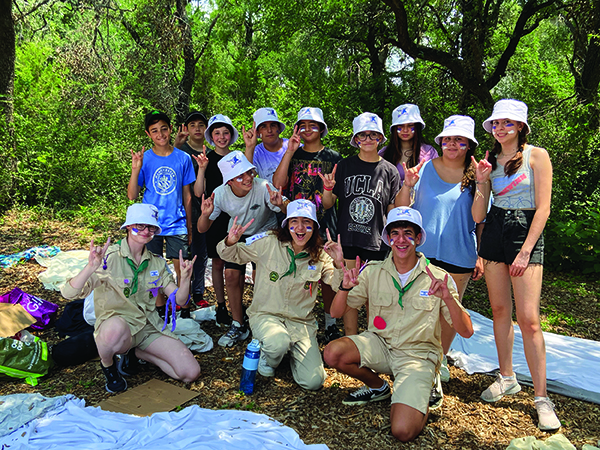
Tzofim, The Israeli Scouts, Find a Warm Welcome in Austin’s Jewish Community
Tzofim young leaders (Madrichim). Credit: Dali Litinski By Devorah Fuchs A heartwarming initiative has blossomed in Austin as the Tzofim, the Israeli Scouts, establish their presence for the first time in the city. Led by a group of passionate Israeli Austinites,...
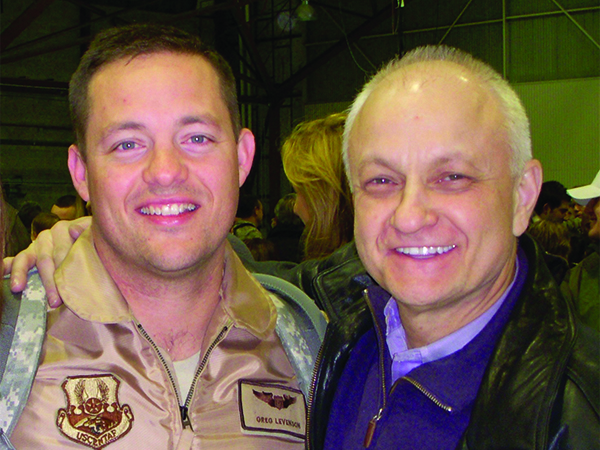
Texas Tech University Press Publishes Story About a Jewish American Fighter Pilot
Greg Levenson and Norman Shulman return from Iraqi deployment. Courtesy: Norman M. Shulman. By Norman M. Shulman, Ed.D and Dwight Gard, Ph.D. In July 2022, Texas Tech University Press published "Love Norm: Inspiration of a Jewish American Fighter Pilot," a...

L’Chaim City Limits 3.0 Is Taking Place in Austin This July
Friends enjoy L'Chaim City Limits 2.0. Courtesy: Scott Eiseman By Scott Eiseman, Founding President of Judaism United Judaism United, a nonprofit that was formed by a group of Jewish young adult friends in 2019, recently announced that “L’Chaim City Limits (LCL) 3.0”,...
7300 HART LANE
AUSTIN, TEXAS 78731
(512) 735-8000

Follow Us:


HEALTH & WELLNESS
Fitness
Swimming
Tennis & Pickleball
Sports
EDUCATION
Jewish Culture & Education
Early Childhood Program Preschool
After School & Childcare
Camps
ARTS & CULTURE
Literary Arts
Visual Arts
Theatre & Film
Dance
COUNSELING & SUPPORT
Jewish Family Service
Counseling & Groups
Case Management
References & Resources
Disability & Inclusion

Copyright Shalom Austin 2025. Privacy Policy.