

Mental Health Matters at Shalom Austin Jewish Family Service
By Emma Howitt
As one year of living the pandemic lifestyle closes, it is clear that the impact on life will go on. Scientists and infectious disease experts around the world continue to emphasize the uncertain timeline of COVID-19. This health crisis has challenged the limits of the economy, the medical system, and the everyday experience. No one has been unaffected, and everyone has had their resilience tested.
Shalom Austin Jewish Family Service is committed to reducing the stigma related to mental distress. Mental health is undeniably altered when so many important areas of life are drastically changed. To slow the spread of COVID-19, people have had to quickly adapt how to work, educate youth, socialize and more. At the intersection of these abrupt and prolonged changes there is a second pandemic, one that is jeopardizing our mental health.
Beginning in April 2020, the National Center for Health Statistics partnered with the Census Bureau to implement the biweekly Household Pulse Survey to rapidly monitor changes in mental health in the United States as a result of the pandemic. Anxiety symptoms increased nationwide from the start of the pandemic, peaking in July when more than 30 percent of respondents reported feeling anxious or on edge more than half of the days in the previous week. The proportion of Americans reporting feeling hopeless more than half of the time increased steadily and reached a high of 37 percent in October. These figures are significantly higher compared to national surveys conducted in 2019, when 21 percent of adults reported these symptoms that year.
These statistics are possibly no surprise because many have likely felt the effects. Living in this ongoing state of uncertainty about COVID-19 has taken its toll on everyone in the community. Children and adolescents (and their parents) have felt the persistent stress of virtual education, reduced school resources and fewer socialization opportunities. Members of the community faced financial strain and housing and food insecurity due to lost jobs and wages. Older adults have felt fear, isolation and technological barriers when much social connection moved online. Rates of domestic violence have increased, alongside rates of substance abuse and suicidality. Many have felt a deep sense of loss during this pandemic, while grieving loved ones lost to COVID-19 and the familiar life everyone lived before the virus swept the globe. People have also shown strength as our community has risen to these challenges. While lives have transformed, not all those changes are negative.
The stressors, traumas and challenges felt before March 2020 have not disappeared; rather, people have been forced to layer the unknowns, the anxiety and the fear of a deadly virus on top of those and push forward. As scientists learned more about COVID-19, their guidance helped change some personal habits, such as physical distancing, frequent handwashing and wearing masks around people who live outside of each household. When the situation calls for a change that is vital to safety, people have shown the ability to adapt. It is imperative to adapt with the same vigilance to address mental health.
For too long, stigma has been a barrier to seeking support and caring for mental health challenges. Humans are complex and JFS recognizes that mental health is an integral component of overall health. Caring for mental health and wellness is a practice, much like other health habits. It takes time to develop awareness, effective coping and self-compassion. In response to these evolving needs, JFS has begun expanding professional staff to serve the broad needs of the community, through counseling and case management services.
Engagement in therapy can support the development of essential mental health skills that support everyday wellness. JFS therapy and case management sessions are currently accessible through telehealth video platforms, which often removes the obstacles of scheduling and travel. JFS support groups offer a virtual space for social connection, encouragement and compassion. Professional staff members offer a wide range of psychoeducation and workshops for further building these skills and connections. Mental health matters during this critical moment in time, and JFS will be here to support the health of our community now and in the future.
Latest Posts

Hanukkah: Finding Light in the Darkness
Hanukkah is a time for celebrating miracles – the miracle of survival; the miracle of light in the darkness; the miracle of restoration and refreshment; the miracle of second chances. But Hanukkah comes at a time that yes, can be joyous, but also can seem stressful,...
Fighting Hate in Our Communities – No Hate in the Lone Star State
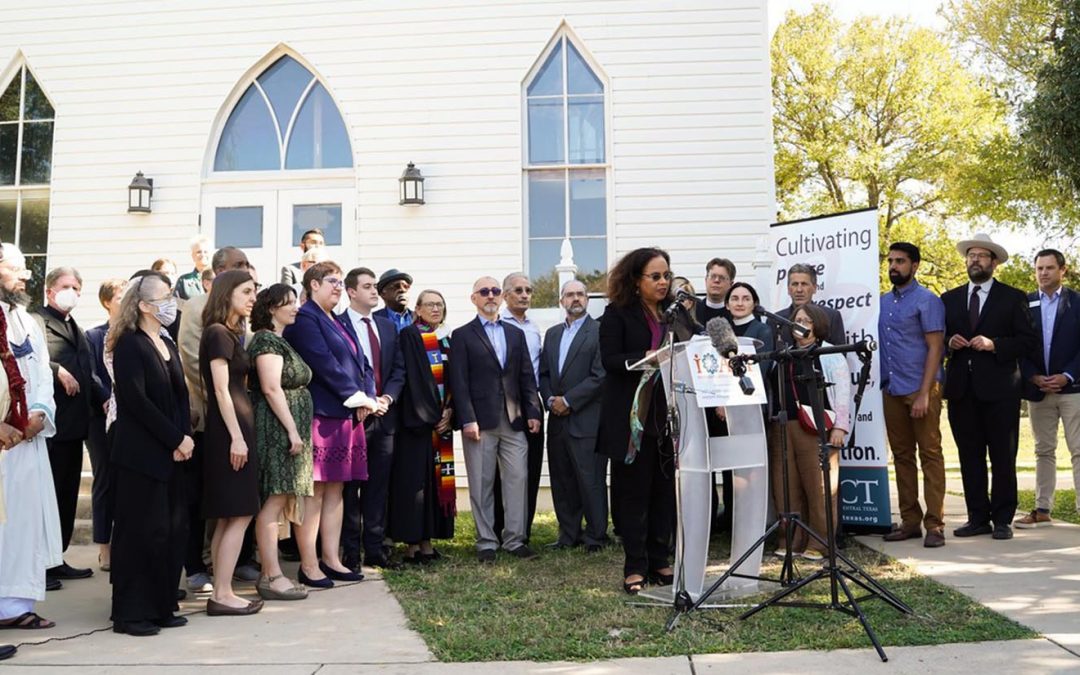
On Monday, Nov. 1, Interfaith Action Central Texas (iACT) and hundreds of local government and Jewish community leaders to publicly released a statement of unity against anti-Semitism and in support of the Austin Jewish community. Along with the statement, the iACT,...
NMJHS and TJHS Plan “West of Hester Street” Webinar for October
The New Mexico Jewish Historical Society and Texas Jewish Historical Society announce the webinar, “West of Hester Street and the Galveston Movement: Jewish Immigration in the Southwest,” scheduled for Saturday afternoon and Sunday morning, October 30-31, 2021....
7300 HART LANE
AUSTIN, TEXAS 78731
(512) 735-8000

Follow Us:


HEALTH & WELLNESS
Fitness
Swimming
Tennis & Pickleball
Sports
EDUCATION
Jewish Culture & Education
Early Childhood Program Preschool
After School & Childcare
Camps
ARTS & CULTURE
Literary Arts
Visual Arts
Theatre & Film
Dance
COUNSELING & SUPPORT
Jewish Family Service
Counseling & Groups
Case Management
References & Resources
Disability & Inclusion

Copyright Shalom Austin 2025. Privacy Policy.