

Solidarity in Action: U.S. and Hungarian Doctors Support Israel’s Medical Frontline
14 physicians go to the Western Galilee on a weeklong medical mission organized by Partnership2Gether, a project of the Jewish Agency for Israel. Courtesy: Partnership2Gether
By Hillel Kuttler
Permission to reprint granted by Partnership2Gether | Western Galilee Central Area Consortium
“Expand your spheres of influence,” read a slide projected on a wall by Louis Profeta, an emergency-medicine physician from Indianapolis during a talk he gave in the auditorium of the Galilee Medical Center on January 14.
That’s precisely what some of Profeta’s 13 colleagues in the audience, physicians from the central United States and Hungary, said they’d do once they were back home.
The 14 physicians had come to the Western Galilee on a weeklong medical mission organized by Partnership2Gether, a project of the Jewish Agency for Israel that strengthens ties between American and Israeli communities. P2G’s Central Area (which includes 16 communities in Illinois, Ohio, Indiana, Kentucky, Iowa, Nebraska and Texas, along with Budapest, Hungary) is linked to Israel’s Western Galilee, which includes the Mateh Asher region and Akko; the connection is known as Partnership2Gether Western Galilee.
Profeta’s message, he told an audience that included the hospital’s physicians and other staff, was this: “We should not be content enough just to be doctors, because we have so much [more] to offer.”
His comment resonated with fellow participants. Several explained later that they had plenty to bring back to their home communities by way of Israel advocacy.
While they’d come to learn — and did learn — from their Israeli colleagues in various specialties during the program’s five full days, they said they’d be returning better equipped as first-hand observers to speak about Israel’s reality during this challenging period. The mission occurred during a ceasefire in the war that the Lebanese terrorist group Hezbollah launched against Israel on Oct. 8, 2023, the day after Hamas’s massacre of approximately 1,200 Israelis near the Gaza Strip.
GMC is Israel’s northernmost hospital, sitting in Nahariya, just six miles from the country’s border with Lebanon. Moments after Profeta’s presentation, the P2G delegation walked through the hospital’s basement to attend another talk, passing a ward that had been moved underground more than a year ago as a precaution against Hezbollah-launched missiles.
The delegation also came to learn about critical medical services they could provide during a future emergency that might arise in Israel.
“You come here and you really see how it is. Because I’ve been coming here so long, I feel connected to the Western Galilee region [and] to the hospital. My heart brought me here,” said Sandy Bidner, M.D., an orthopedist in Austin, Tex., who co-chairs P2G’s medical committee.
The committee’s Israeli co-chair, Aya Kagade, is the director of GMC’s international affairs department, which organized the mission’s program.
“The connection of the medical center to the P2G program is significant in showcasing a shared commitment to resilience, preparedness and solidarity,” Kagade said.
It was the second visit to Israel since the war began for Matt Schocket, M.D., an anesthesiologist and pain management physician, like Bidner from Austin.
“This is not a trip about being an active physician. This is a solidarity mission. My purpose for coming here is reporting back what I’ve seen and increase people’s connection to Israel,” he said. “This was an opportunity to come and learn and see — and take it back to my home community.”
The delegation had much to observe that morning during a comprehensive drill the hospital’s emergency department ran to test the response to a mass-casualty scenario involving 16 patients brought in following a crash between a bus and a car. The hospital’s top officials, CEO Prof. Masad Barhoum, M.D., and deputy director Tsvi Sheleg, M.D. — both of whom had addressed the P2G group — were among those attending the exercise.
“I can go back to my hospital and tell them how everyone works together here and that drills are much more realistic — decades ahead, without question,” said Eric Schreier, M.D., who specializes in physical medicine and rehabilitation in Fort Wayne, Ind. “Everyone works together. It’s [very] organized: the signs, the labels, the technology. They take it much more seriously.”
P2G participants received temporary credentialing from Israel’s Ministry of Health. Some saw patients. Anna Roshal, M.D., an oncologist based in Indianapolis, attended clinic visits, allowing her to communicate with some patients in Russian, her mother tongue, having grown up in Belarus. She also engaged in valuable one-on-one teaching and provided immediate guidance to her junior colleagues in oncology and palliative care.
She had been in Israel just four months earlier to visit relatives. Profeta then told her about P2G and the medical mission in January. Roshal said she responded, “A medical trip? I can’t imagine any way a cancer doctor could be helpful. He said, ‘You do not understand. You’ll be helpful by being here, and then you’ll come back and join me in Indianapolis and talk to people.’ ”
And so she signed on — the first of her 10 trips to Israel that wasn’t family-centric. “The first time I came to Israel [in 1992], it changed my life. All of a sudden, I realized who I am,” she explained.
Like Profeta, Michelle Elisburg, M.D., who practices pediatrics in Louisville, Ky., used the word “helpful,” but the equation went the other way for her.
Visiting the Jewish state and speaking with local pediatricians was a relief from the anti-Israel rhetoric she often encounters back home.
“When you’re being bashed and demonized all the time, talking to like-minded people is helpful. It’s self-care, because you don’t feel so alone,” said Elisburg. “It’s war, and I want to do something. If we were here at peacetime, we’d be talking about something else.”
The delegation’s program included observing procedures, making clinical rounds, seeing the hospital’s wartime underground command center, attending a lecture on treating oral and maxillofacial injuries suffered during the war and off-site visits to the Magen David Adom ambulance service’s local branch and to a military base’s medical clinic.
Participants also socialized at a home-hospitality program hosted by Toni Ziv, a member of P2G’s management committee and a longtime P2G volunteer.
The program and medical context appealed so much to Denver pediatrician Michael Milobsky, M.D., that he joined the mission, at his own expense, even though he doesn’t come from a P2G Central Area community.
“I wanted to show up in some way, with skin in the game, and … do something more meaningful,” Milobsky said.
Milobsky gained insight into Israeli healthcare professionals’ commitment when he attended a presentation on the medical center’s preparation for potential attacks from Hezbollah.
“Here’s a hospital that in an incredibly short period of time had to create a complex system to redistribute patients, move them to an underground bunker if necessary and have everyone available to fill their role,” he said. “Everyone’s willing to be part of the bigger picture. There’s a bigger job to do, and they’re willing to do it together.” ■
Writer-editor Hillel Kuttler can be reached at [email protected].
End of article.
_______________________
Q&A with Medical Mission Participant Dr. Matt Schocket of Austin, Texas
- How did you learn about the opportunity to go to the Western Galilee on a weeklong medical mission organized by Partnership2Gether?
- I received an email from Amy Hyman, Shalom Austin chief philanthropy officer, who let me know about it. I was then connected to one of the co-chairs of the Partnership Medical Committee, Dr. Sandy Bidner in Georgetown. I generally don’t try to pass up an invitation to go to Israel for a good cause, so after speaking with him, I decided to go.
- Could you please share some of what you learned or gained from participating in the medical mission?
- I would encourage everyone to listen to the recent The Rabbi and the Other Guy podcast episode (Episode 24) where Shalom Austin CEO Rabbi Daniel A. Septimus interviewed me along with the episode that we recorded with Dr. Tsvi Sheleg who is one of the leaders at the hospital. I think that can provide a lot insight. I think I learned so much about the spirit of the Israeli medical community in terms of their “get it done” attitude. I think that in contrast to the United States where we have a separation of military and civilian hospitals, in Israel that is not the case. So, this medical center, which is an 800-bed medical center that treats 650,000 people living in the Northern area of Israel, also must be ready at a moment’s notice to take in a mass casualty event involving soldiers. They must have the ability to prepare for that, and to do drills so they are ready as a civilian hospital. It is pretty incredible.
The other huge takeaway is the foresight of the former president of the hospital. Being so close to the Lebanon border back in the 70s, they needed to fortify the hospital. They started digging underground to fortify some critical areas including operating rooms. Now nearly 55 years later, they have a nearly fully-fortified hospital and while it doesn’t have all 800 beds underground, it has the ability to have 400-450 admitted patients, all of their operating rooms, all of their labor and delivery rooms, some of their radiology and other departments fully fortified so that it can continue to function even if missiles are raining down from Hezbollah a mere 10km away.
- This was your second visit to Israel since the war began. Could you please share how this trip was different from the previous one?
- During my first trip, the war was less than three weeks old, Rabbi Septimus and I arrived in Israel on October 27 [for the Jewish Federations Mission trip], and it felt a little like being in COVID in the beginning. We landed at the airport and Ben Gurion, which is traditionally packed with people, and there was literally no one there. We checked into the hotel in Jerusalem and decided to walk to find something for dinner, and we stood in what should have been massively crowded streets and it was like a ghost town. I think the mood of a lot of Israelis we met on that trip was somber and there was a lot of uncertainty as to what was going to happen. There was a lot of resilience and resolve and there was also a lot of uncertainty.
I was there a year later, and the mood was very different this time. The tone was much more vibrant than last time. There had been a recent ceasefire in the North at the time which I think helped this to some extent. As I talked to more people on this trip, I got the sense that as to the uncertainty, what was going to become of Israel after October 7 was really gone. Obviously, there is still conflict going on, there are lots of things still to accomplish, but the sense of accomplishment in the terms of military defeat of Gaza and Hezbollah and the fact they weren’t under constant rocket threat anymore has gone a long way to show the Israelis that Israel is here to stay. It is a powerful country.
Latest Posts
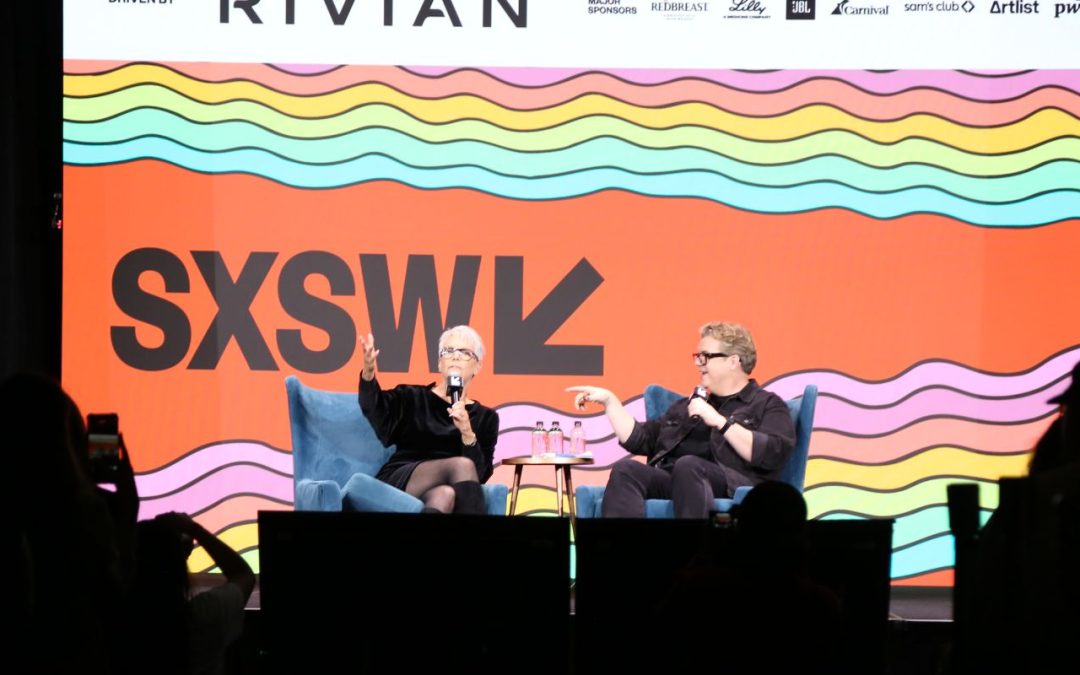
SXSW 2026: Jamie Lee Curtis Inspires at SXSW 2026
Jamie Lee Curtis on stage with H. Alan Scott at SXSW 2026. Credit: Wendy Goodman By Wendy Goodman Jamie Lee Curtis brought energy and honesty to her SXSW 2026 session on March 14, “If Not Now, When, if Not Me, Who? Pivoting and Manifesting!” Curtis sat down with H….
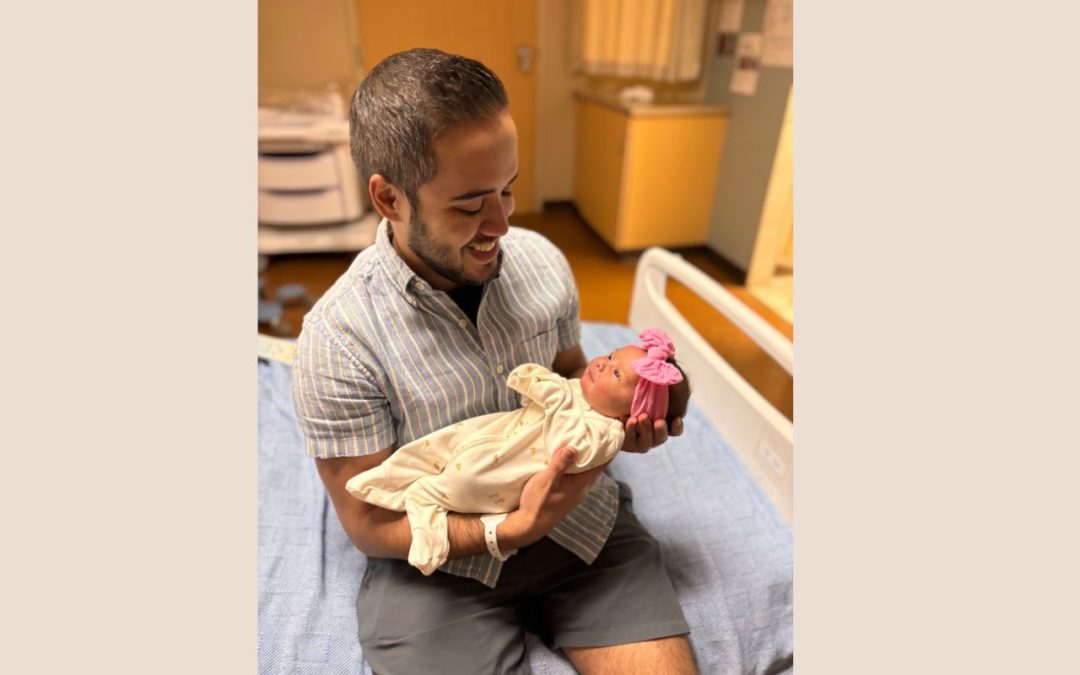
A Community That Helps Bring Life Into the World: How Hebrew Free Loan of Austin Helped One Austin Father Build His Jewish Family
Alex proudly embraces his daughter in the hospital, shortly after her birth. Courtesy: Hebrew Free Loan of Austin By Debbie Cohen Late in 2025, Alex became a father. At 36 years old, having moved to Austin from Massachusetts in 2020, Alex welcomed his daughter Hannah…
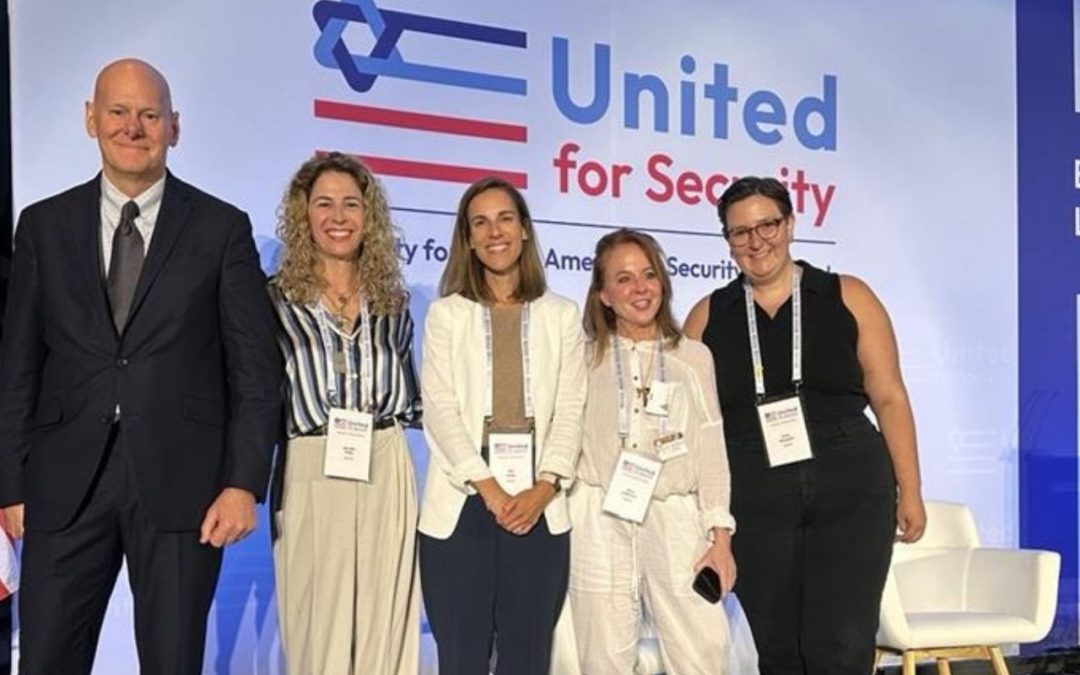
Public Affairs at Shalom Austin: Two Years of Impact, Partnership, and Progress
Jewish Federations of North America Emergency Leadership Fly-In to Washington, D.C. in June 2025. L-R Andy Dooher, Jennifer Failla, Phil Loewy, Nora Lieberman, Emily Bourgeois. Courtesy: Emily Bourgeois By Emily Bourgeois, Shalom Austin Public Affairs Director When…
7300 HART LANE
AUSTIN, TEXAS 78731
(512) 735-8000

Follow Us:


HEALTH & WELLNESS
Fitness
Swimming
Tennis & Pickleball
Sports
EDUCATION
Jewish Culture & Education
Early Childhood Program Preschool
After School & Childcare
Camps
ARTS & CULTURE
Literary Arts
Visual Arts
Theatre & Film
Dance
COUNSELING & SUPPORT
Jewish Family Service
Counseling & Groups
Case Management
References & Resources
Disability & Inclusion

Copyright Shalom Austin 2025. Privacy Policy.