
The Scourge and the Surge: A Historic Turning Point for American Jewry
On January 7, 2025, Jonathan D. Sarna, a leading scholar of American Jewish history, delivered the inaugural lecture for the “Living the American Jewish Experience,” an annual series attended by over 250 people and sponsored by Marcia and Barry Silverberg.
Sarna’s lecture focused on four key themes: the consolidation of world Jewry, the bifurcation of American Jewry, the resurgence of antisemitism, and the unexpected “surge” in Jewish communal participation. His analysis placed contemporary events in a broad historical context, underscoring both the challenges and opportunities that have emerged in the wake of crisis.
A New Jewish Geography
One of Sarna’s most striking observations was how the geographic distribution of world Jewry has fundamentally changed over the past century. In 1939, 16.8 million Jews were spread across every inhabited continent. Today, of the 12.9 million Jews in the world, roughly 90% reside in just two places: North America and Israel. This consolidation, he argued, has made Jews increasingly interdependent while also heightening their vulnerability. The impact of the Holocaust on Jewish life is evident.
Moreover, Sarna emphasized that this demographic shift has contributed to new perceptions of Jews worldwide. Whereas Judaism was once a truly global faith, it is now largely confined to the First World. Consequently, many in the developing world have little direct exposure to Jewish people or traditions, shaping their views through media narratives that often portray Jews as part of a Western power structure. This ideological framing, particularly among some Third World nations and academics, influenced the global response to the October 7th attacks, positioning the conflict as a colonial struggle rather than an act of terrorism.
The Growing Divide Within American Jewry
Sarna highlighted a growing bifurcation within American Jewry along religious, educational, and marital lines. For much of American history, Jewish communities—despite denominational and cultural differences—shared common values: Jewish peoplehood, mutual responsibility, and commitment to Jewish continuity. However, these unifying principles have eroded.
The divide is most apparent in religious identity. Pew Research studies indicate that American Jewry is increasingly polarized between two groups: one deeply engaged in religious life and the other largely secular. Similarly, Jewish education has become a defining fault line. While some Jewish children receive extensive Jewish schooling—including day schools, summer camps, and study programs in Israel—others receive little to no formal Jewish education.
Intermarriage further compounds this divide. Among non-Orthodox Jews married since 2010, over 70% have non-Jewish spouses. Sarna noted that these patterns are reshaping American Jewish identity and weakening traditional commitments to Israel, as seen in the generational divide on college campuses after October 7.
The Resurgence of Antisemitism
A sobering portion of Sarna’s lecture addressed the dramatic resurgence of antisemitism in the United States. While antisemitism had declined significantly after World War II, recent years have seen its alarming return, particularly on college campuses and in political discourse.
Citing data from the Anti-Defamation League, Sarna noted a 200% increase in antisemitic incidents following the Hamas attacks, making 2023-2024 the worst period for antisemitic hate crimes in the U.S. since tracking began. Jewish students reported social penalties for supporting Israel, while synagogues, schools, and Jewish organizations have had to invest millions in security measures.
The Unexpected “Surge” in Jewish Engagement
Despite these challenges, Sarna concluded on an optimistic note, describing what researchers have called “the surge”—a dramatic rise in Jewish communal participation since October 7. Historically, periods of persecution have often triggered Jewish revival, and today’s resurgence appears to follow this pattern.
Jewish organizations have reported record levels of engagement. Hillel International has seen unprecedented student participation, Chabad centers have experienced a 40% increase in attendance, and Jewish day schools have noted a surge in enrollment. Remarkably, conversion rates have also spiked, with many non-Jewish spouses of Jews seeking formal entry into the faith.
This revitalization suggests that rather than weakening Jewish life, the recent crisis has catalyzed a renewed sense of solidarity and identity. Sarna likened this moment to the post-Revolutionary War era when Mordecai Sheftall, a Jewish patriot, wrote that after a long and bloody struggle, a “new scene” was opening, and “we have the world to begin again.”
Conclusion: A Defining Moment for American Jewry
Sarna’s lecture painted a complex yet ultimately hopeful picture of American Jewry’s future. While antisemitism and internal divisions pose significant challenges, the remarkable “surge” in Jewish engagement suggests that this moment of crisis may also be a moment of renewal.
As American Jews navigate this new landscape, their ability to strengthen communal bonds, invest in education, and foster intergenerational continuity will determine the long-term impact of this historic turning point.
Latest Posts
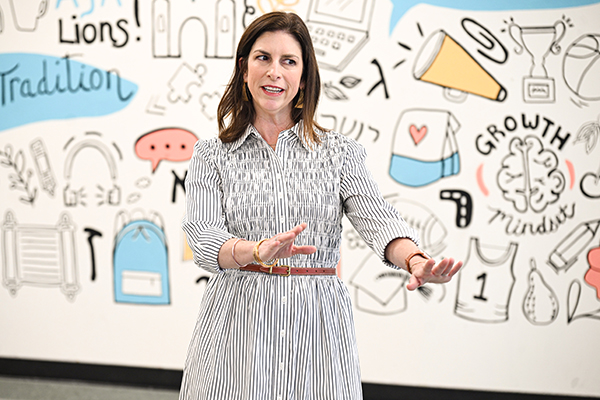
Austin Jewish Academy Welcomes New Head of School
Dr. Karyn Rayburn speaks to parents and teachers at AJA about “Joyful Rigor.” Courtesy: Austin Jewish Academy By Natalie McKee Austin Jewish Academy is pleased to welcome Dr. Karyn Hopper Rayburn as incoming Head of School, beginning in the 2026–2027 academic year….
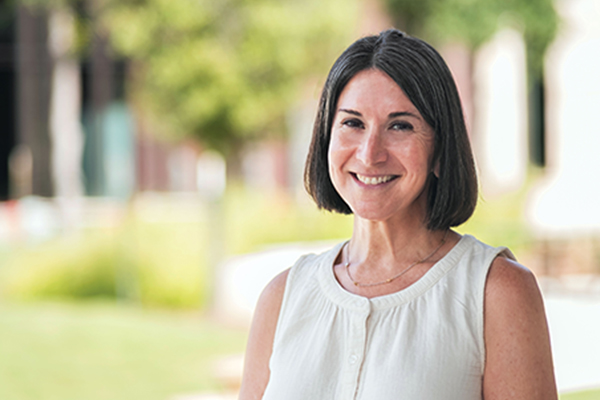
Shalom Austin Announces Rachel Stern as Next CEO
Rachel Stern in the courtyard at the Dell JCC. Credit: Andrew Holmes Shalom Austin announced on March 12 that Rachel Stern will become its next Chief Executive Officer, beginning July 1, 2026. Stern has been a senior leader at Shalom Austin since 2018, previously…
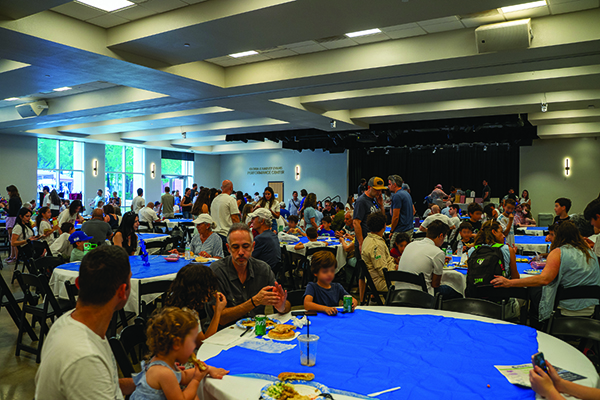
Americans and Israelis Show Up in Unity for the Meaningful Month of April
The community celebrates Yom HaAtzmaut at the Dell JCC. Credit: Rebecca Golden By Alachua Haskins, Jackie Nirenberg, and Jessica Ochs The Jewish calendar keeps Jewish people connected. They celebrate together, remember together, and show up for each other through…
7300 HART LANE
AUSTIN, TEXAS 78731
(512) 735-8000

Follow Us:


HEALTH & WELLNESS
Fitness
Swimming
Tennis & Pickleball
Sports
EDUCATION
Jewish Culture & Education
Early Childhood Program Preschool
After School & Childcare
Camps
ARTS & CULTURE
Literary Arts
Visual Arts
Theatre & Film
Dance
COUNSELING & SUPPORT
Jewish Family Service
Counseling & Groups
Case Management
References & Resources
Disability & Inclusion

Copyright Shalom Austin 2025. Privacy Policy.